Answer Engine Optimization (AEO)
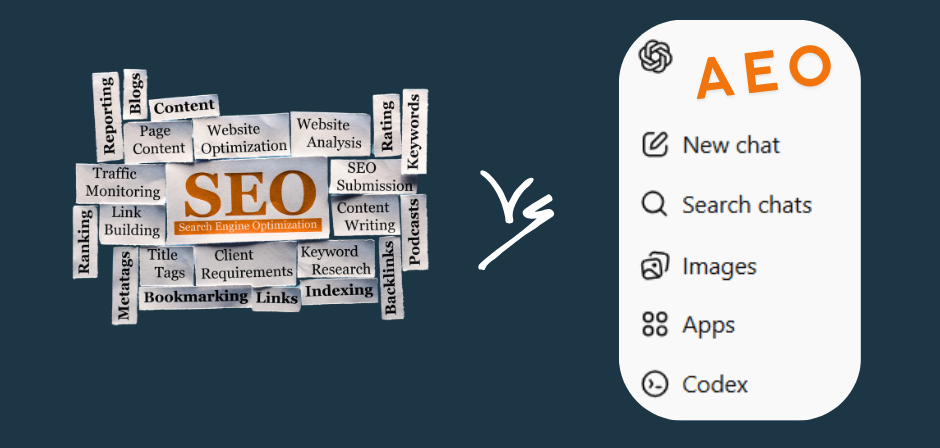
Why AEO Exists
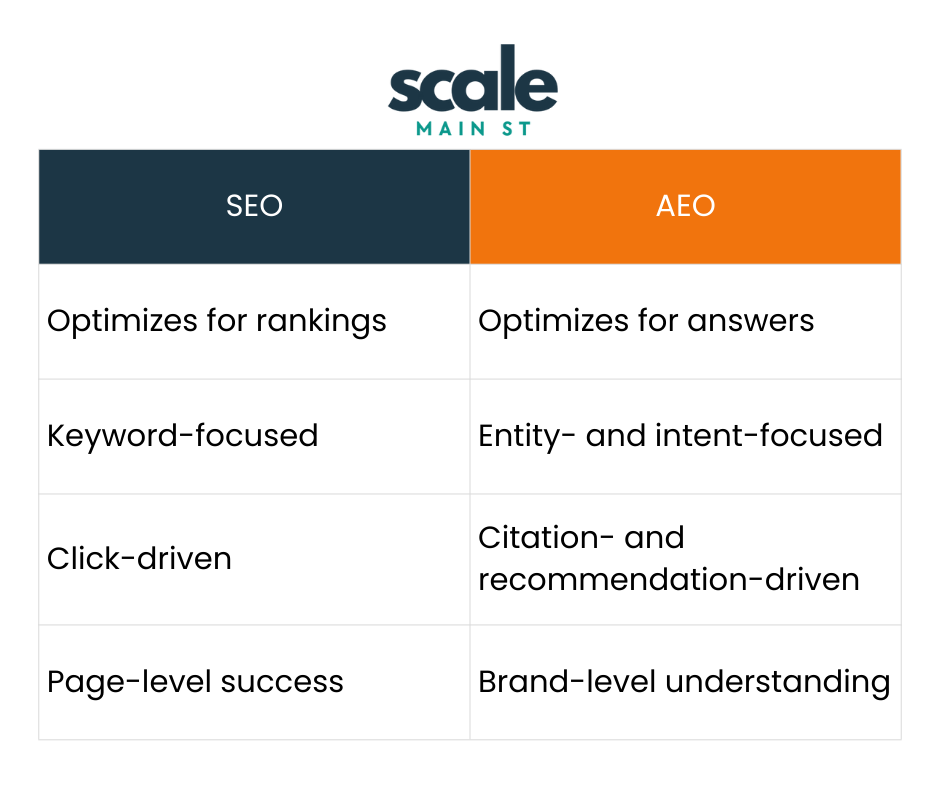
Traditional search was keyword-based. AI-driven search is context-based.
Modern answer engines:
- interpret user intent,
- understand entities and relationships,
- retrieve trusted information,
- and generate direct responses.
Websites that are unclear, poorly structured, or overly promotional are filtered out early, even if they rank well organically.
AEO exists to solve that gap.
What AEO Optimizes on a Website
AEO focuses on how AI systems read, interpret, and reuse your content.
Key areas include:
1. Entity Understanding
AI does not think in keywords. It thinks in entities such as businesses, services, locations, people, and concepts.
AEO ensures your website clearly defines:
- who you are,
- what you do,
- where you operate,
- and how your content relates to real-world concepts.
This allows AI systems to place your website correctly inside knowledge graphs.
2. Structured Data and Clarity
AEO relies heavily on:
- schema markup,
- clean HTML structure,
- clearly labeled sections,
- and explicit answers.
This gives AI structured signals instead of forcing it to infer meaning.
If AI has to guess, it usually skips.
3. Authority and Trust Signals
Answer engines prioritize sources that demonstrate:
- expertise,
- consistency,
- third-party validation,
- and factual grounding.
That includes:
- citations,
- brand mentions,
- reviews,
- and topical depth.
AEO aligns closely with Google’s EEAT principles, but applies them specifically to AI answer selection.
4. Answer-Friendly Content
AEO content is designed to be:
- concise,
- specific,
- easy to quote,
- and contextually complete.
Pages often focus on answering one primary question clearly rather than covering everything vaguely.
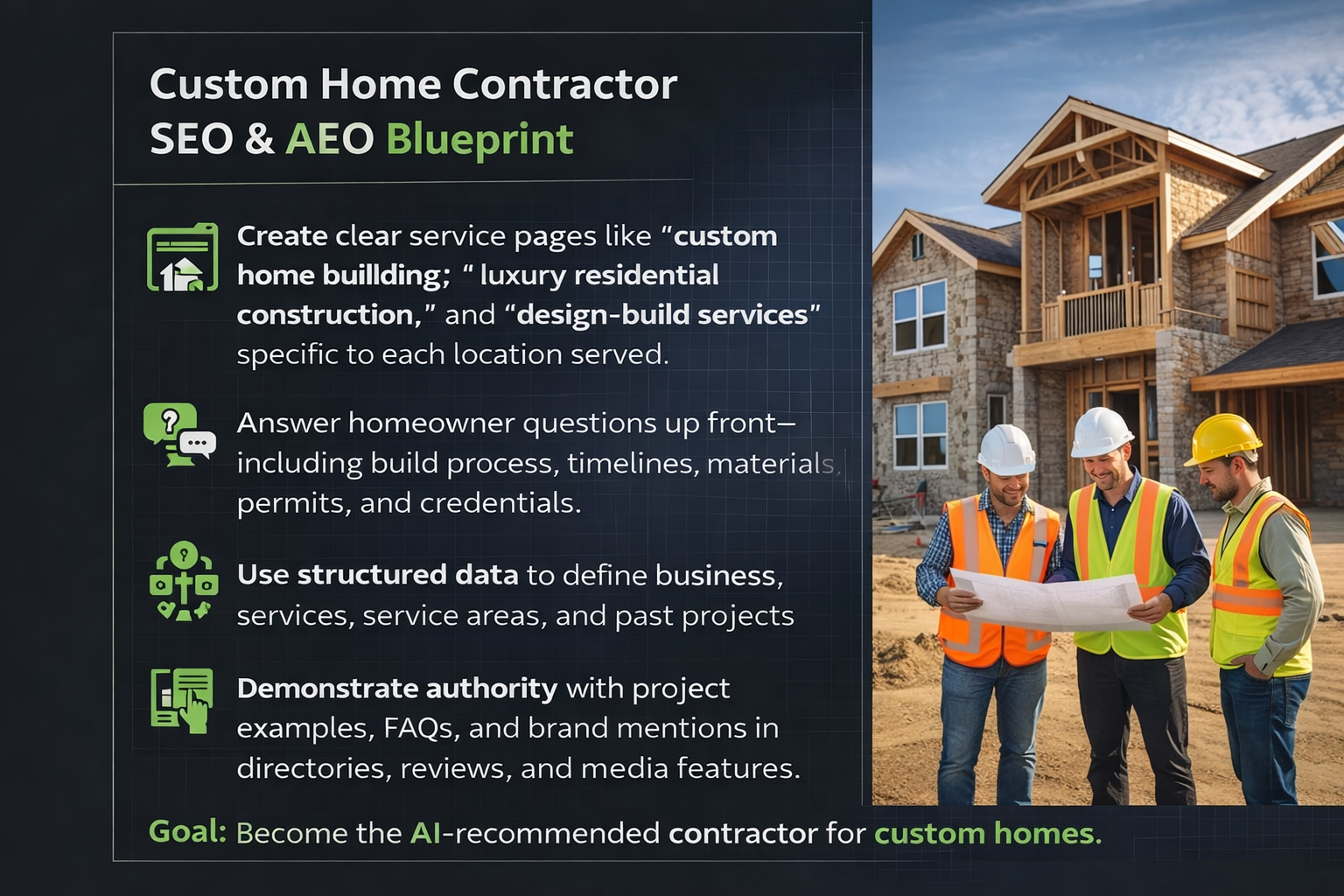
See an example below for a Custom Home Contractor.
Blueprint:
A custom home contractor should align SEO and AEO by restructuring their website around clear, high-intent service pages such as custom home building, luxury residential construction, and design-build services, each tied to the exact locations they serve. Every page should answer homeowner questions early, clearly explaining the build process, timelines, materials, permits, and credentials in plain language. Structured data should be used to define the business, services, service areas, and past projects so AI systems can easily understand and categorize the contractor. Authority is built by publishing detailed project examples, FAQs, and consistent brand mentions across directories, reviews, and media features. The objective is not just to rank in search results, but to be the builder AI confidently recommends when someone asks who to hire for a custom home in their area.
Main St. TIPS